
TRINITY PARISH
Client
Trinity Parish
Location
Seattle, Washington
Size
15,500 SF
Timeframe
2026-2027
Status
In Permitting / Historic Preservation Review
General Contractor
RAFN Construction
Mechanical Engineer
Ecotope
Structural Engineer
Quantum Consulting Engineers
Acoustic Engineer
Tenor Acoustical Design
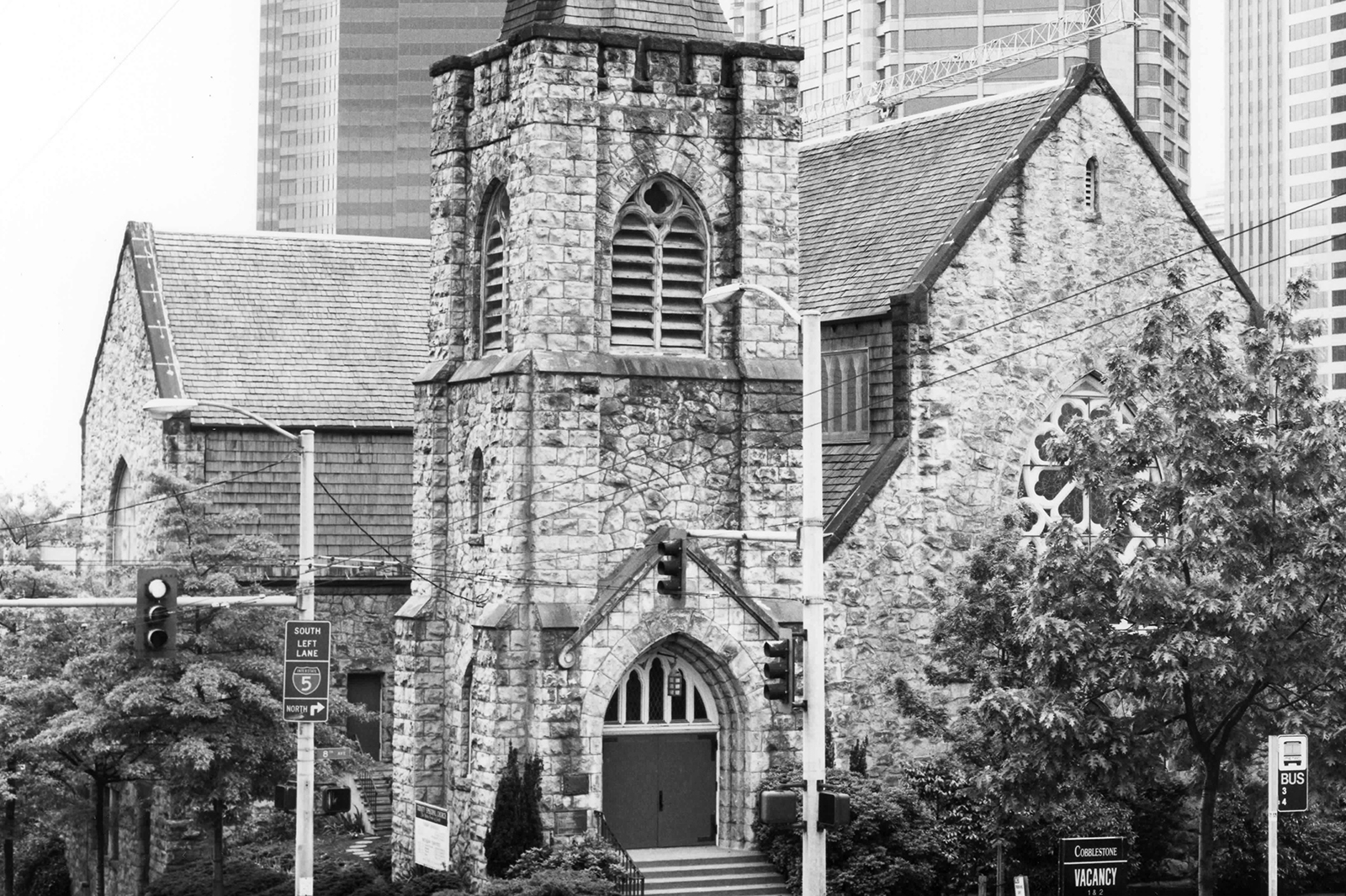
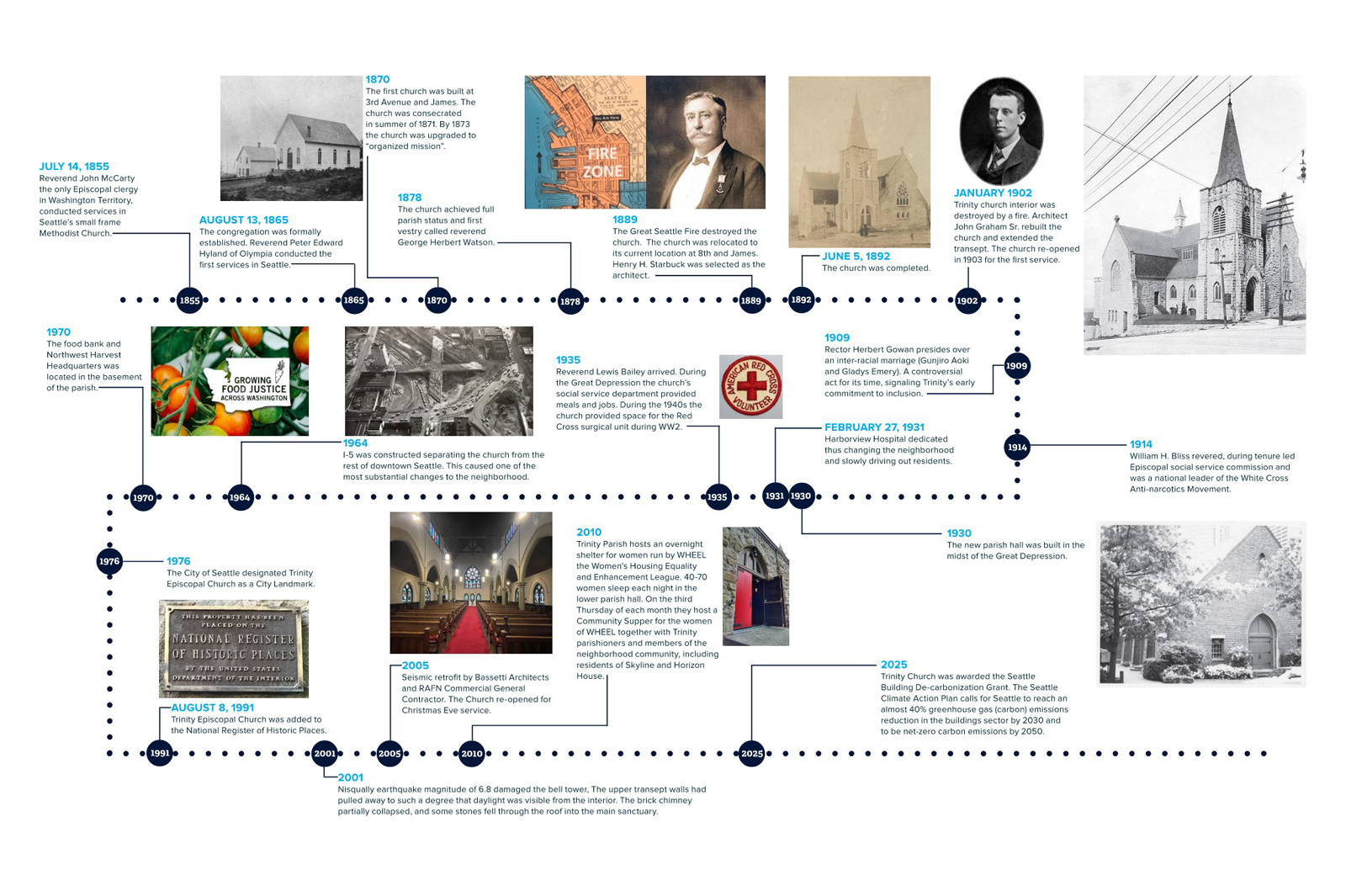
Trinity Parish Episcopal Church is a landmark building with more than 130 years of architectural and community history in Seattle’s First Hill neighborhood. Completed at its present site in 1892 and substantially rebuilt following the 1902 fire, the church was designated a City of Seattle Landmark in 1976 and added to the National Register of Historic Places in 1991. Its long history of community service makes the current project less about changing the building than preparing it to continue serving for another generation.
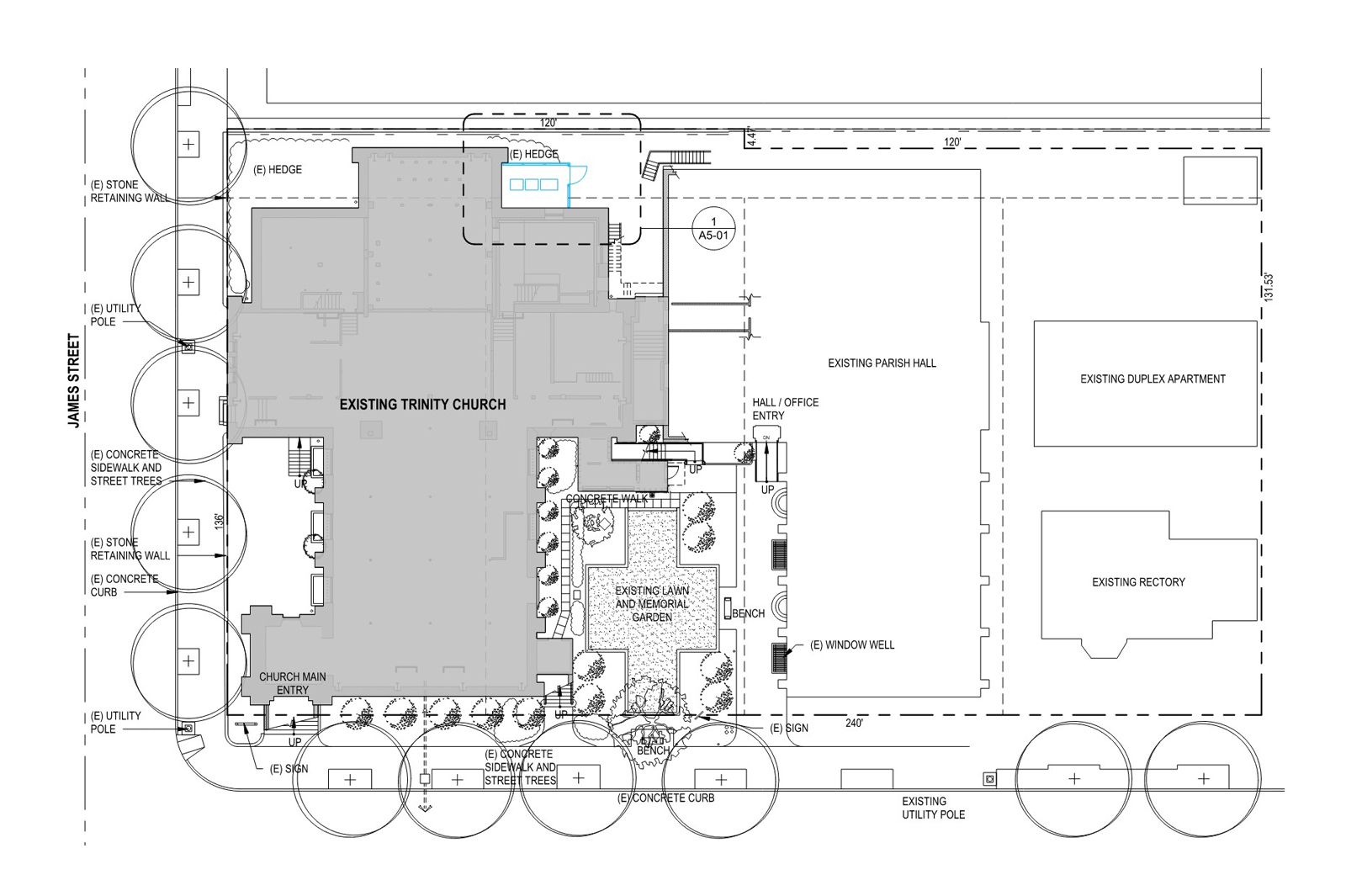
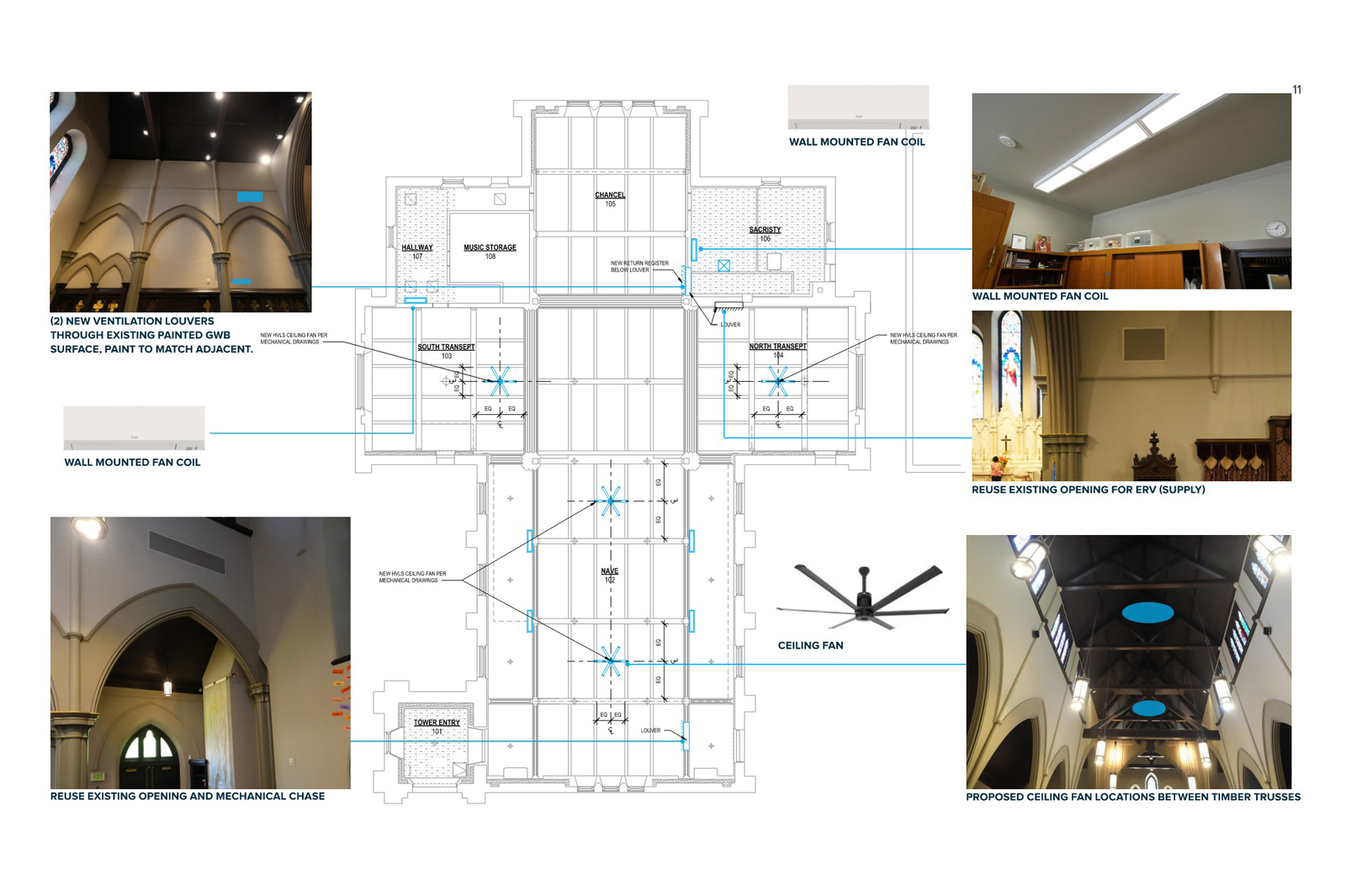
As part of the City of Seattle’s Building Decarbonization Grant Program, Upward Architecture is providing architectural support associated with replacement of the church’s aging steam-based heating infrastructure with a modern, all-electric HVAC system. The engineering solution separates heating and cooling from ventilation through a Variable Refrigerant Flow (VRF) heat-pump system and a Dedicated Outdoor Air System (DOAS) with energy recovery.
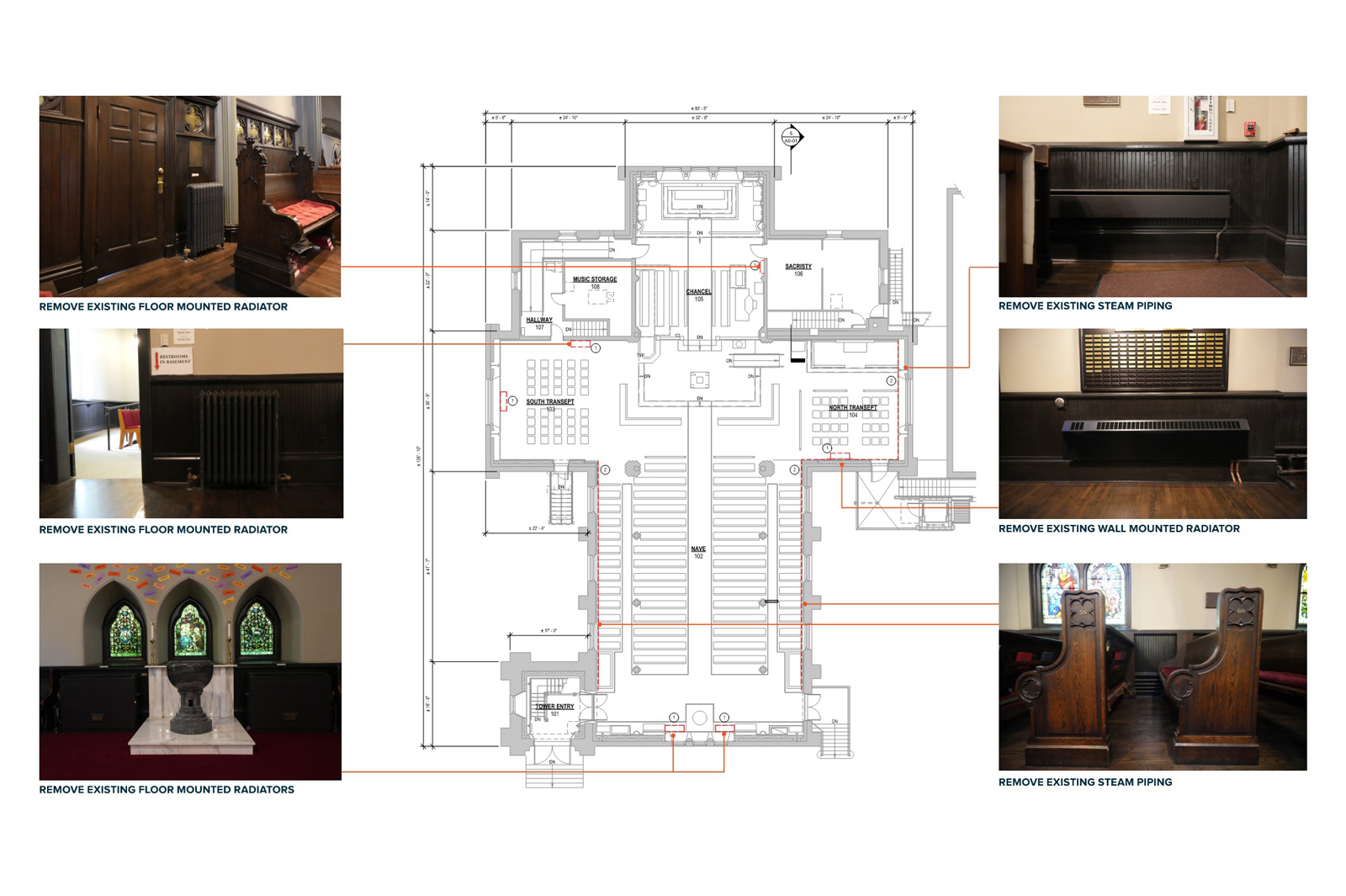
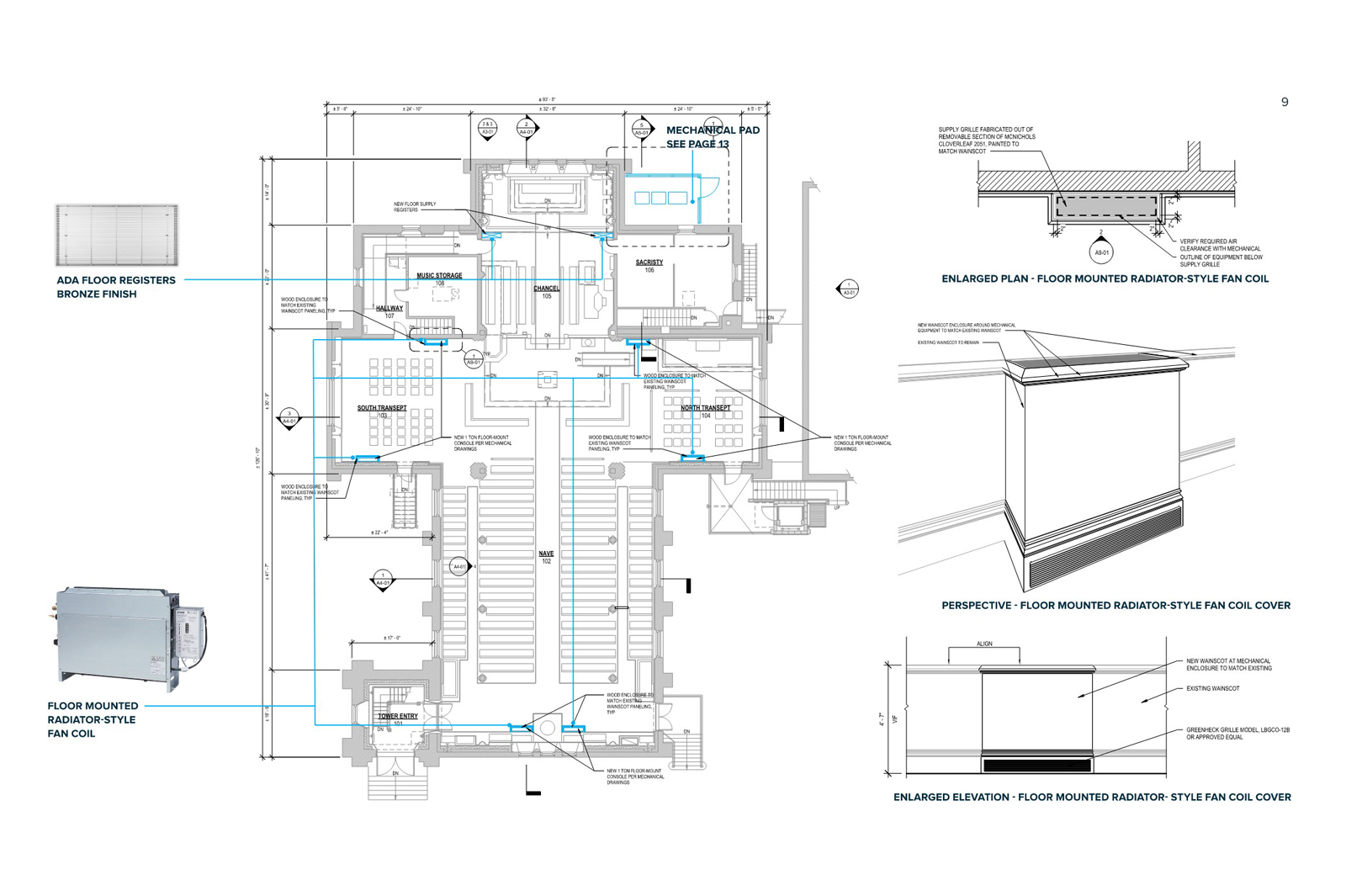
Within the sanctuary, removal of the existing radiators and steam piping will require particular attention to the church’s historic wainscot and wood trim. New floor-mounted VRF fan-coil units are encased within wood enclosures designed to match the existing wainscot, allowing modern equipment to occupy roughly the same architectural footprint as the systems it replaces. Existing woodwork is retained wherever possible and repaired where piping is removed; new floor registers and equipment covers are detailed to remain subordinate to the historic interior.
Central to the project is a recognition that environmental responsibility and historic preservation are not competing objectives. The design preserves portions of the decommissioned steam equipment as evidence of the church’s mechanical history while replacing obsolete infrastructure with systems intended to improve energy performance, indoor air quality, thermal comfort, and long-term building resilience. The result is a deliberately quiet intervention: a significant modernization of how the building performs, accomplished with as little impact as possible to how this Seattle landmark is experienced.

