


Location
Skagit Valley, Washington
Size
65,000 SF
Timeframe
2018 – 2022
Services Provided
Master Planning
Project Management
Architectural Design
Upward Architecture led the design and master planning for a regional distillery’s new multi-building campus in Skagit Valley, a project developed over several years in close collaboration with the distillery’s leadership, equipment vendors, and engineering team. Conceived as both a production hub and an immersive visitor destination, the campus establishes the distillery’s long-term home in the agricultural heart of Washington’s grain belt while advancing their commitment to terroir-driven American single malt whiskey.
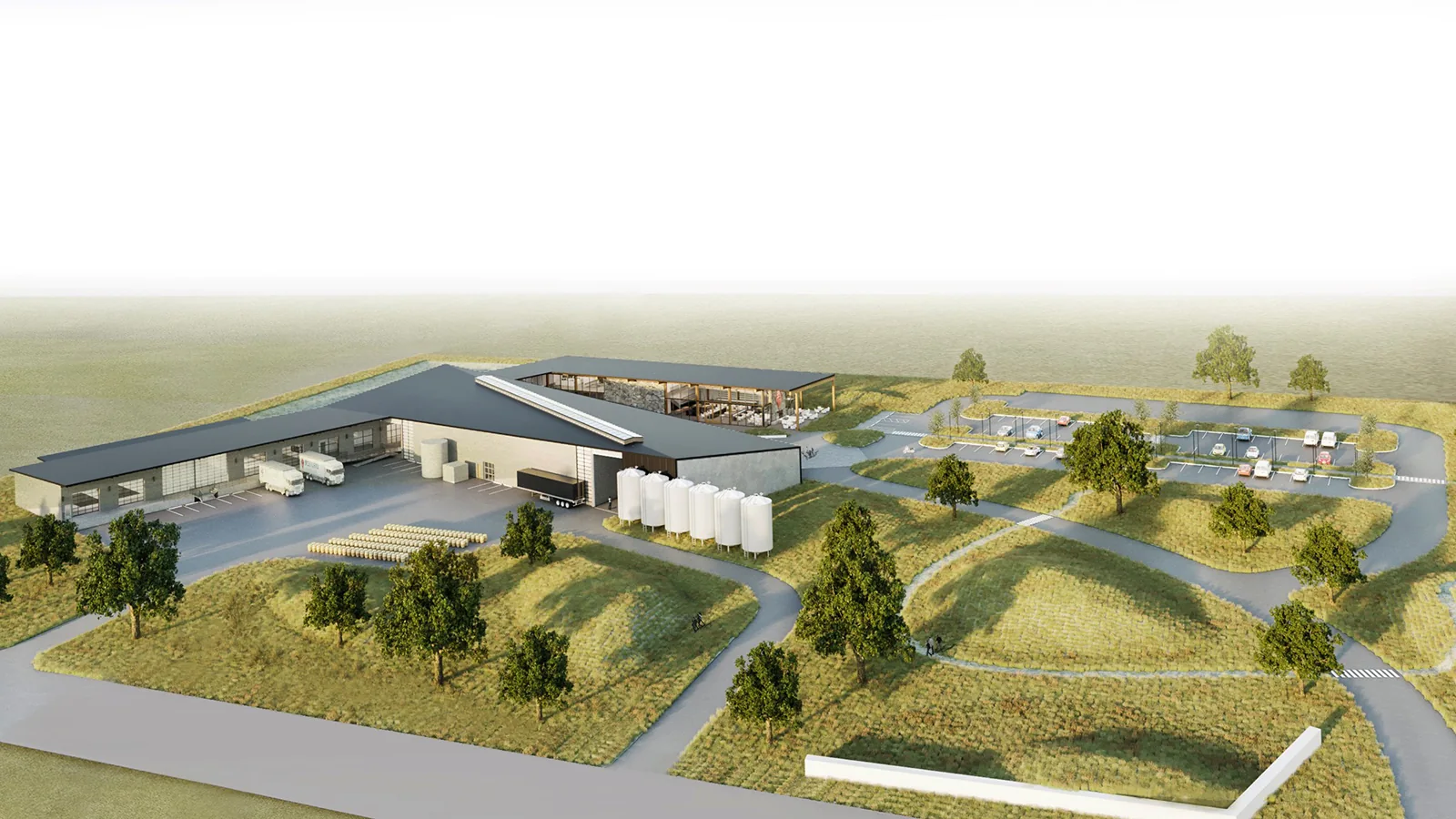
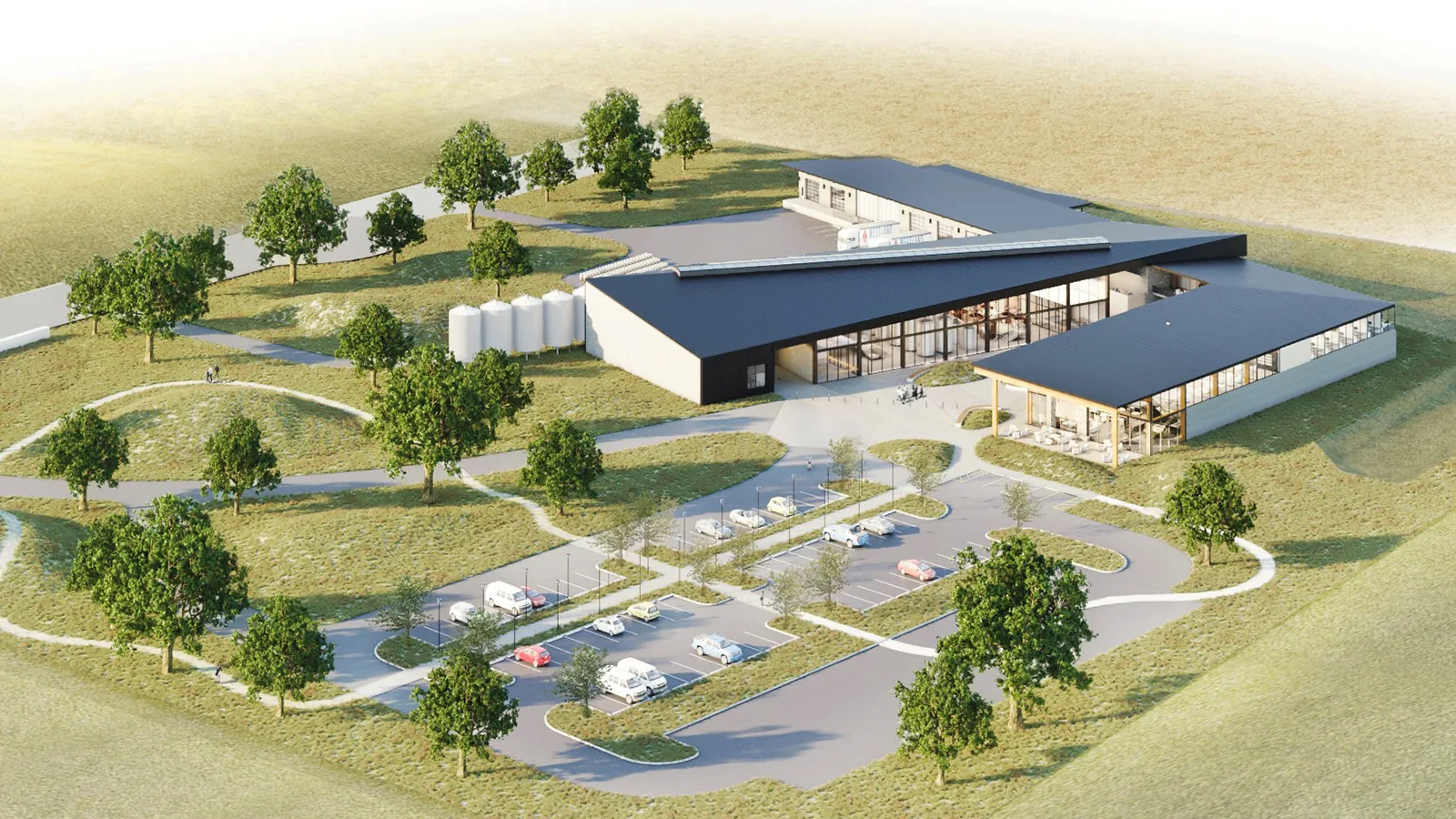
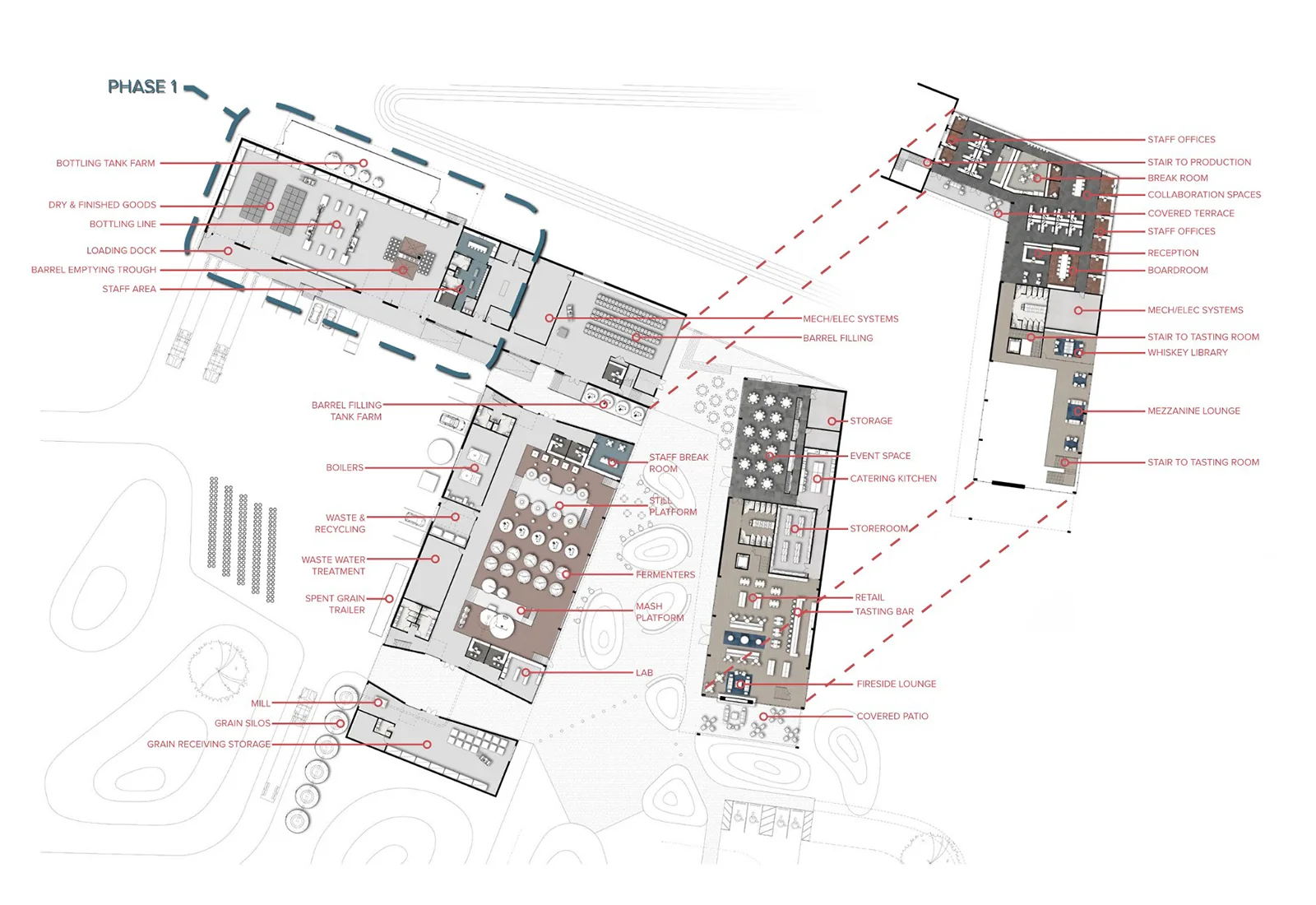
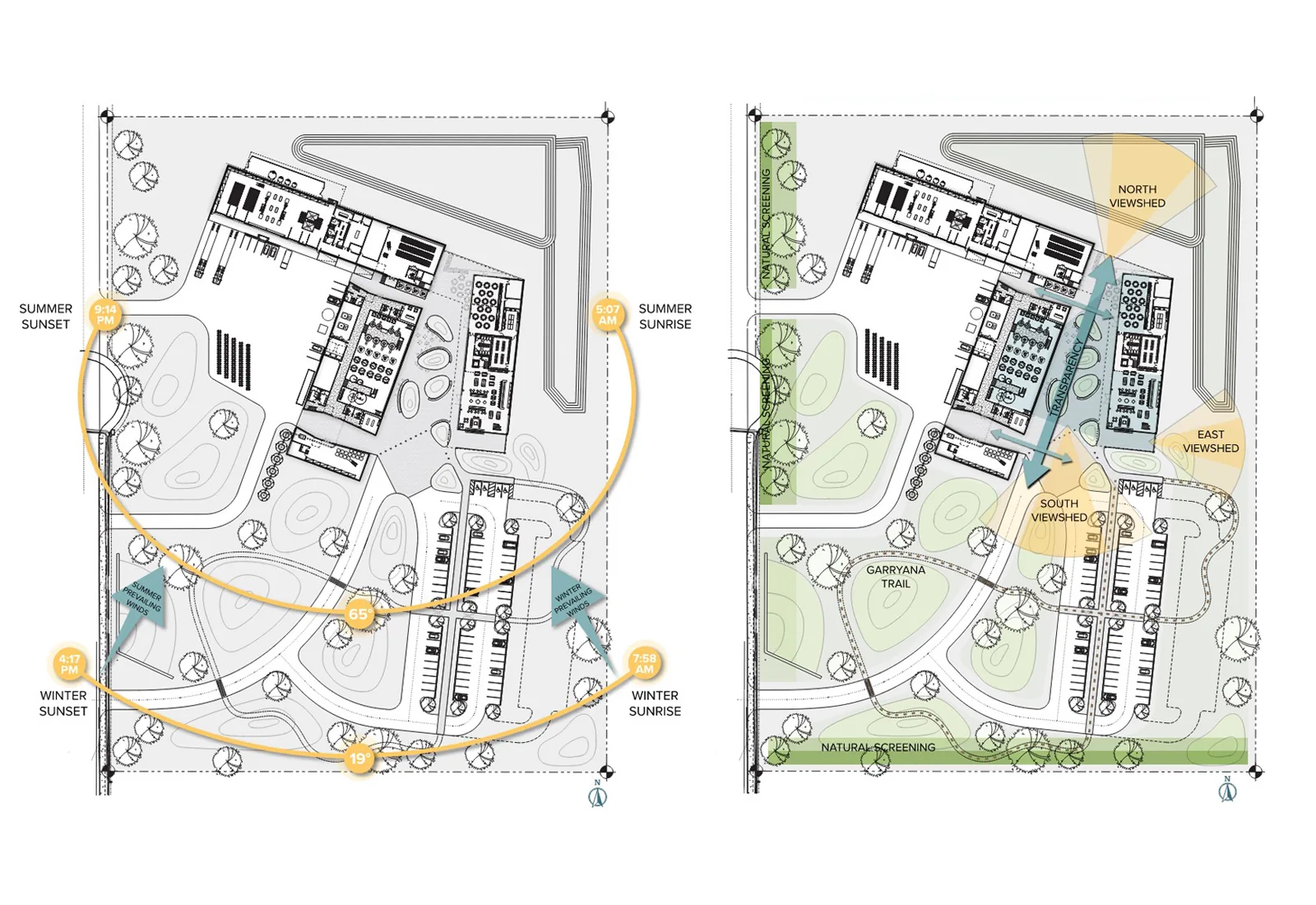
Site planning strategies were central to the process. The master plan spans two parcels totaling nearly 100 acres: a 12-acre industrial site for production, bottling, storage, and guest services, and an 80-acre agricultural parcel for rackhouses and experimental barley fields. The design organizes production flow, warehousing, and visitor arrival into clear zones, balancing the industrial requirements of a large-scale distilling operation with the experiential needs of visitors.
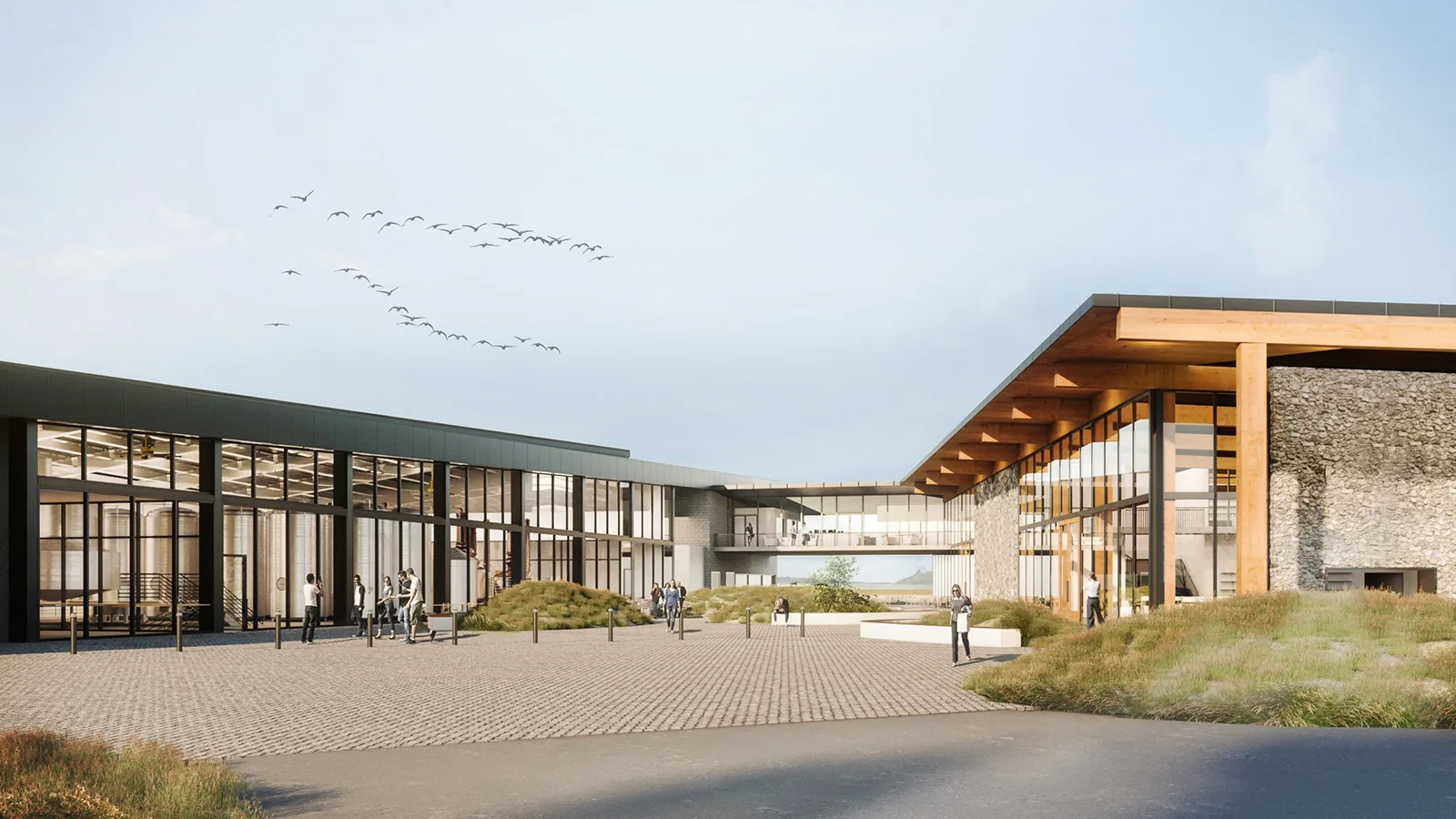
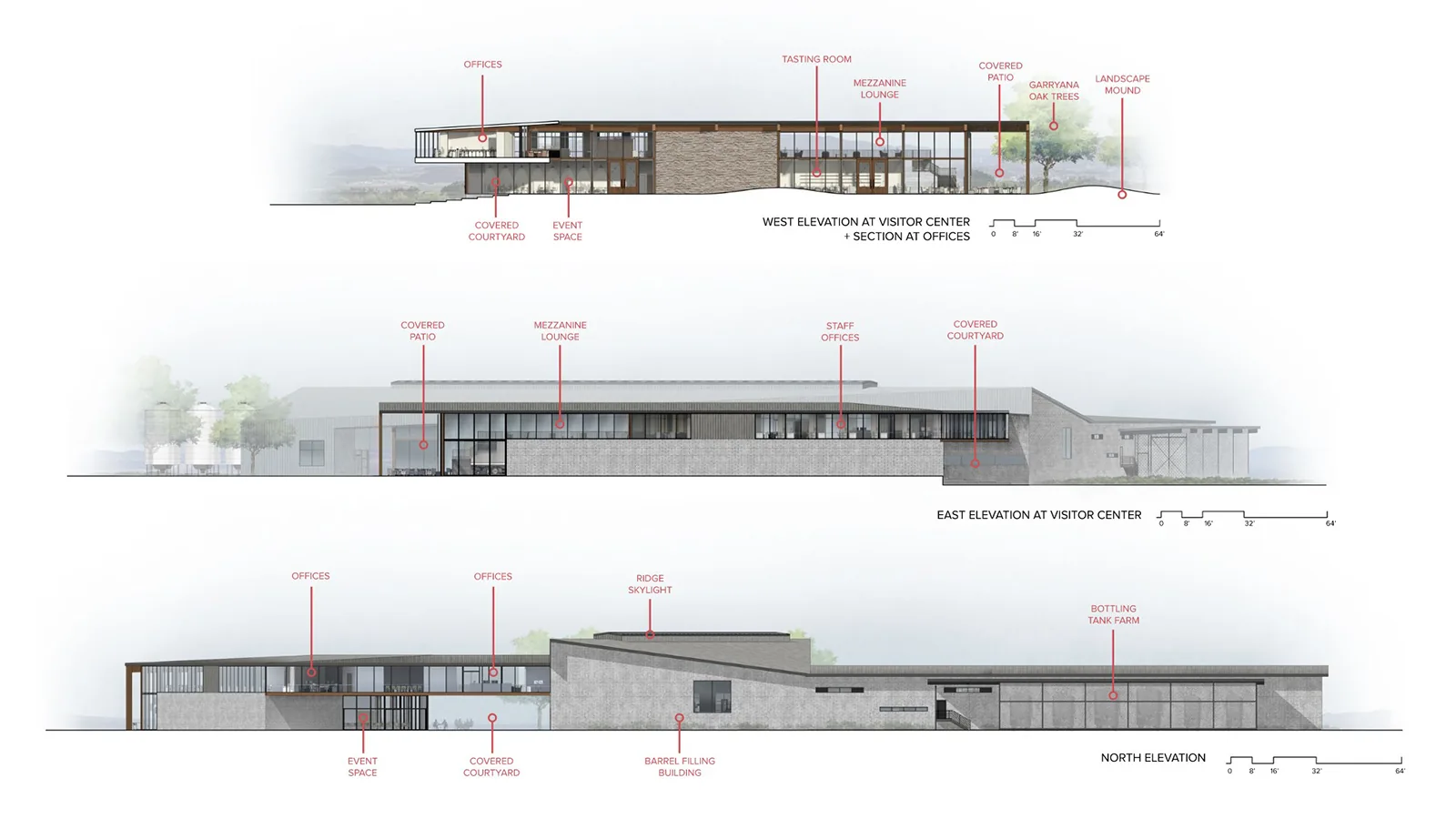
The visitor center is designed as the public gateway to the campus, with tasting rooms and outdoor terraces overlooking the agricultural landscape. A central courtyard and Garry oak restoration zone tie the public program to the valley’s ecology, while interpretive trails and gathering areas invite guests to experience the relationship between grain, land, and spirit.
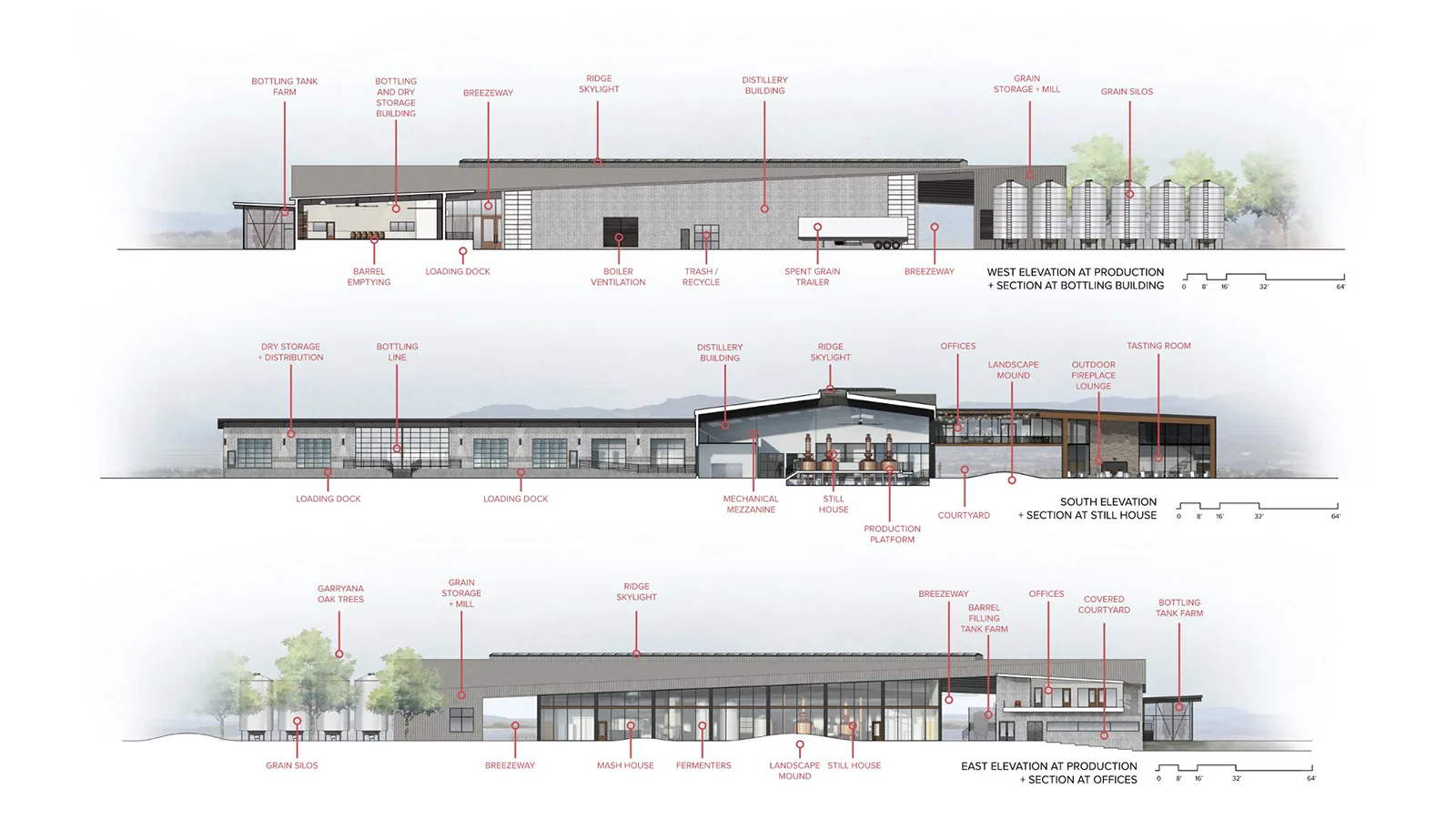
Coordination with the distillery’s operations director and equipment vendors was also a key part of the design effort. Early facility and equipment planning allowed for efficient arrangement of tanks, stills, bottling lines, and circulation routes, ensuring the buildings could flexibly accommodate both current needs and future expansion. Courtyards, breezeways, and elevated offices frame views into production, ensuring guests experience milling, mashing, fermentation, and distilling firsthand.
The nearby 80-acre agricultural parcel houses 8–10 rackhouses (15,000 SF each) constructed in phases, providing capacity for thousands of barrels of aging whiskey. Downhill from these buildings, fields are reserved for barley test plots in collaboration with Skagit Valley farmers and the WSU Bread Lab. This agricultural integration not only strengthens the whiskey’s regional character but also invests directly in the valley’s farming economy, turning a historically low-value crop into a driver of innovation and prosperity.
Sustainability & Community
From the outset, the project aligned with the UN Sustainable Development Goals, embedding sustainability into every layer of design:
-
Water: onsite treatment, reuse of pot ale and condenser water, stormwater managed with low-impact development strategies.
-
Energy: daylight harvesting, high-efficiency envelopes, solar readiness, waste-biomass boilers, and heat recovery systems.
-
Ecology: habitat restoration, Garry oak plantings, and protection of surrounding farmland.
-
Wellbeing: WELL building principles, daylight and views for staff, healthy materials, and active transportation strategies.
Community impact is equally central. The campus will create local jobs, strengthen Skagit’s agricultural economy, and support educational partnerships with the Bread Lab and other institutions. As one local leader noted, “What Woodinville is for wine, Skagit Valley needs to be for beer, whiskey, and bread”—this project is positioned as a cornerstone of that vision. The Skagit Valley campus is more than a distillery—it is a long-term investment in the land, people, and practices that make American single malt possible. By designing a place where production, maturation, and community converge, our team designed not just a facility, but a legacy.

